

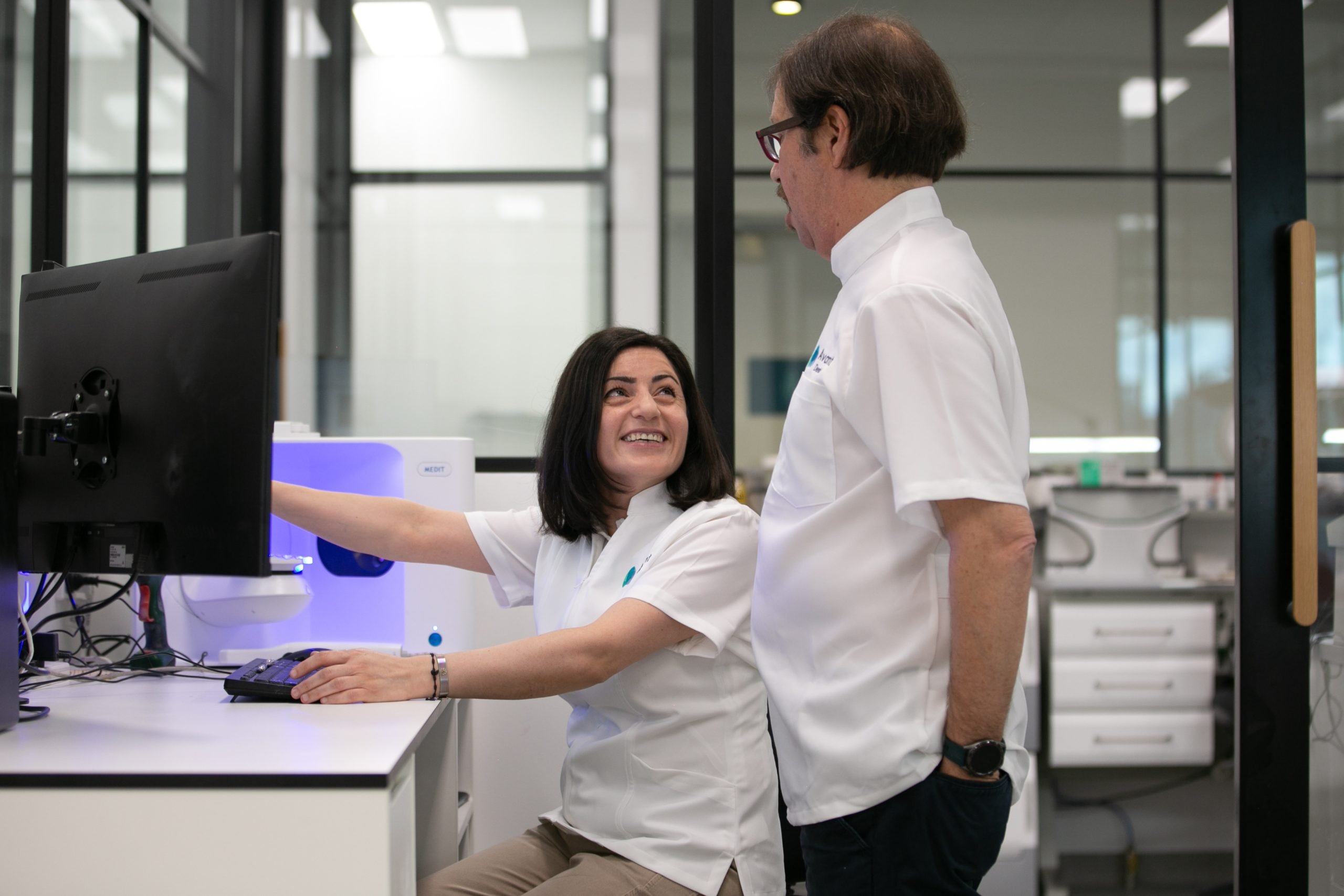
From nylon splints to photogrammetry, Avant Dental reveals the seven key trends that will define the dental industry in 2025.
The dental industry is on the cusp of transformative changes in 2025, driven by advancements in technology, recovering consumer sentiment, and a growing focus on patient-centred care.
As financial stability improves, patients are increasingly prioritising previously delayed treatments, which presents dental practices with new opportunities to re-engage and foster trust with renewed communication.
At the same time, emerging technology like digital workflows, 3D printing, and artificial intelligence are reshaping workflows, enhancing precision, streamlining processes, and improving treatment outcomes.
Nylon splints are gaining traction for their durability, flexibility, and comfort, while the rise of 3D design in dentistry is enabling highly personalised restorations and predictable results.
In 2025, artificial intelligence (AI) will play an increasingly pivotal role in diagnostics, decision-making, and practice management to ensure consistent care, enable early intervention, and reduce the administrative burden.
These innovations reflect a broader trend toward efficiency and precision that will continue to help dental practices deliver exceptional care while staying ahead of patient needs.
In this rapidly evolving landscape, dental professionals who commit to learning how to leverage these advancements will be well placed to optimise operations, improve outcomes, and position themselves at the forefront of modern dentistry.
Consumer confidence set to improve in 2025
Key points:
- Improving consumer confidence suggests many people are adjusting to financial pressures, stabilising their budgets, and regaining confidence in their personal finances.
- As economic uncertainty continues to ease, many patients may prioritise long-postponed dental procedures in 2025.
- For dental practices, this renewed interest represents an opportunity to re-engage with patients through patient-centred communication.
According to the ANZ-Roy Morgan Consumer Confidence survey, there was a steady improvement in consumer sentiment towards the end of 2024 with the index reaching 87.5 points in late October 2024.
This is the highest level the consumer confidence index has reached since January 2023, and suggests that Australians are adjusting to financial pressures, stabilising their budgets, and regaining confidence in their personal finances.
Cost-of-living pressures in recent years have led many people to delay elective procedures – including dental treatments – due to economic uncertainty. However, as financial conditions stabilise in 2025, patients may look to prioritise previously delayed treatments.
Patients may be more likely to seek solutions for long-standing oral health issues, including restorative and cosmetic procedures, that may have been previously postponed.
For dental practices, this renewed interest represents an opportunity to re-engage with patients. By offering flexible financing options, promoting patient-centred communication, and focusing on the long-term benefits of oral health, practices can tap into this growing sentiment.
Patient education will play a key role in helping individuals understand the value of maintaining their oral health as a cornerstone of overall wellness.
To further support these patients, practices may consider implementing automated recall systems that notify individuals about overdue appointments.
These efforts, combined with proactive education and learning, will help dental practices build trust and loyalty in 2025 and beyond.
Nylon splints gain traction as a preferred solution
Key points:
- In 2025, nylon splints will continue to gain traction as patients prioritise solutions offering superior durability, flexibility, and comfort.
- Nylon splints are set to remain a key trend in splint therapy treatment throughout 2025.
- Dental professionals in 2025 will increasingly embrace nylon splints as a robust, low-maintenance option with fewer replacements or adjustments needed.
Nylon splints are gaining traction as a preferred solution for patients requiring long-term oral appliances, and this demand is set to continue through 2025. The growing popularity of nylon splints is largely due to their superior durability, flexibility, and comfort.
Patients benefit from a lightweight and slim design that allows for easy wear, which encourages consistent use and helps achieve successful treatment outcomes. Dentists often recommend nylon splints for conditions such as bruxism and sleep apnoea because they are reliable and provide effective long-term results. These splints are manufactured to fit precisely, ensuring they meet the specific needs of each patient and offer an optimal balance of strength and comfort.
In orthodontics, nylon splints can be useful for retaining teeth alignment after braces or aligners. They can play a key role in preventing post-treatment relapse by preserving the positioning achieved during orthodontic procedures. Dentists often choose nylon splints for this purpose because they adapt well to individual requirements while maintaining durability and functionality over time.
Nylon splints also offer a streamlined solution for dental professionals, as their robust material reduces the likelihood of replacements or frequent adjustments.
By focusing on the clinical and patient-friendly benefits of nylon splints, dentists can provide advanced solutions that meet a wide range of dental and orthodontic needs.
Further reading: Understanding Nylon Splints: Advantages, applications, and limitations
3D printing continues to streamline dental workflows
Key points:
- Advances in printable resins and biocompatible materials will enhance the strength, functionality, and aesthetics of 3D-printed dental products.
- The expansion of 3D printing will include surgical guides, orthodontic appliances, and prosthetics.
Having a lab constantly investing in these technologies will be crucial in offering patients the most advanced treatment options. 3D printing will continue to transform the dental industry in 2025 with advancements that will enhance personalisation, streamline workflows, and expand clinical applications. The ability to produce highly customised restorations such as crowns, bridges, and aligners will improve fit, function, and aesthetics to ensure better patient outcomes.
Innovations in printable resins and biocompatible materials will also expand the range of applications while improving durability and aesthetics to meet the high clinical standards required in dentistry.
Integration with digital workflows, including intraoral scanners and CAD/CAM systems, will streamline processes and reduce errors, and enable more efficient treatment planning and production. Having a lab constantly investing in these technologies will be crucial in offering patients the most advanced treatment options.
Applications will also expand beyond restorations to include surgical guides, orthodontic appliances, and prosthetics, making 3D printing an essential tool in modern dentistry.
Further reading: What is CAD/CAM Dentistry and How Does it Work?
Intraoral scanners become more accurate than ever before
Key points:
- Photogrammetry technology in intraoral scanners will increase accuracy of 3D digital impressions, particularly in capturing full-arch impressions.
- Advanced image-processing algorithms will improve precision and accuracy for full arch all on X implant cases.
- The precise data captured by photogrammetry enables lab technicians to design restorations that meet exact clinical specifications.
Intraoral scanners are well established as a tool for making the impression-capture process faster, more accurate, and more comfortable for patients. However, this is only the beginning as intraoral scanning technology continues to advance in 2025.
Photogrammetry technology in intraoral scanners captures precise 3D measurements by analysing multiple photographs of an object from different angles. This method allows scanners to create highly accurate digital impressions of a patient’s oral structures. Photogrammetry is particularly useful for capturing full-arch impressions, where traditional methods may struggle to maintain accuracy across the full arch.
By using advanced algorithms to process images, photogrammetry ensures that dental restorations and appliances fit more precisely. This reduces the need for verification jigs, remakes or adjustments, saving time for both dentists and patients.
Photogrammetry in intraoral scanners also supports better communication between dental practices and labs. The accuracy of the captured data helps technicians design restorations that meet exact clinical specifications. This results in higher-quality outcomes and improved patient satisfaction.
Further reading: 5 Ways Digital Dental Impressions can Transform your Practice
Artificial intelligence unlocks diagnostic potential
Key points:
- AI platforms like Pearl’s Second Opinion® are now capable of identifying issues such as decay and calculus that may go unnoticed during manual evaluations.
- AI technology will be increasingly used to ensure consistent diagnostic quality by reducing variability between practitioners to standardise patient care.
- AI will be increasingly integrated into practice management software to reduce the burden of repetitive administration tasks.
Artificial intelligence (AI) is making significant inroads into dentistry, enhancing workflows, and supporting clinical decision-making. While still an emerging technology, AI has shown promise in diagnostics, practice management, and patient communication.
Australian dental practices are learning how to adopt AI to enhance diagnostic accuracy, streamline workflows, and improve patient care. For example, AI-powered platforms like Pearl’s Second Opinion® analyse dental radiographs in real time to detect issues such as decay and calculus that may be imperceptible to the human eye.
By providing consistent and reliable diagnostics via AI, Second Opinion® also reduces variability among practitioners, and helps to bridge the gap between new and experienced dentists.
Additionally, AI platforms like Second Opinion® show promise to facilitate better communication with patients by visually highlighting areas of concern to increase patient understanding and improve case acceptance rates.
Beyond diagnostics, AI is being integrated into practice management systems. These tools help automate appointment scheduling, billing, and patient communications, freeing up valuable time for dental teams to focus on patient care. As these systems evolve, they are expected to further reduce administrative burdens and allow practices to operate more efficiently.
Further reading: Why Australian dental practices are embracing artificial intelligence (AI)
Treatment focus shifts heavily to preventive care
Key points:
- Practices that focus on preventive care will build trust and loyalty while fostering stronger patient connections.
- Rapidly improving salivary diagnostic tools will help dentists identify bio markers for earlier and more effective interventions.
- Advancing AI-assisted technologies will support early identification of cavities and other dental issues to reduce the need for invasive treatments.
The emphasis on preventive care will continue to grow through 2025 as dental practices are learning to educate patients and address oral health issues before they require invasive treatments. Advances in technology, including salivary diagnostics and early detection tools, are making preventive care more effective than ever.
Preventive care offers both clinical and economic benefits by reducing the overall cost of treatment and enhancing patient outcomes. This trend reflects a broader shift toward proactive healthcare in dentistry.
This will be led in part by rapidly advancing salivary diagnostics tools that will help identify markers for oral and systemic conditions, such as gum disease and diabetes, to allow for early intervention. And advanced detection tools, like Second Opinion®, will enable dentists to identify cavities and other issues at earlier stages and reduce the need for invasive procedures.
Practices that prioritise prevention build stronger relationships with their patients. Regular patient communication like consistent follow-ups and reminders for regular check-ups ensure patients stay on track with their oral health goals, leading to better outcomes over time.
Digital dentures take the next step to transform dental prosthetics
Key points:
- Digital technology in denture production is simplifying processes by reducing the number of patient visits needed while ensuring accurate and efficient results.
- Artificial intelligence is enhancing the digital denture process by using advanced design tools to predict optimal fit and aesthetics.
- The ability to store patient data digitally allows for efficient and accurate replication or modification of dentures when needed.
Digital dentures are transforming dental prosthetics through the use of digital technology that streamlines workflows, reduces the need for multiple patient visits, and enhances both accuracy and efficiency. At the same time, advanced materials used in 3D printing are enhancing durability, ensuring a longer lifespan, and meeting stringent clinical and aesthetic standards.
The integration of artificial intelligence (AI) in the digital denture process is another trend shaping 2025. AI-driven design tools that predict optimal fit and aesthetics will reduce the likelihood of adjustments and enhance patient satisfaction.
Digital archiving of patient data also allows for seamless replication of dentures when replacements or modifications are needed. Furthermore, the shift towards sustainability in the dental industry highlights the eco-friendly advantages of digital denture production, which reduces material waste compared to traditional methods.
As technology continues to evolve, digital dentures will remain at the forefront of dental innovation, combining efficiency, precision, and patient-centred care to redefine what is possible in prosthetic dentistry.
Further reading: Digital Dentures: Common Misconceptions and FAQs
The final word: A year of transformation
The dental industry’s advancements in 2025 are not just about adopting new technologies, but also about reshaping the way practices approach patient care and business operations. Innovations are empowering practices to enhance collaboration with labs, refine workflows, and deliver more consistent outcomes.
Patient expectations are also evolving, with growing demand for personalised, efficient, and sustainable solutions. Dental practices have an opportunity to build stronger connections with patients by addressing these expectations with tailored services and transparent communication.
The integration of these advancements is fostering an environment where technology and human expertise are learning to work together to improve overall patient satisfaction and trust. Practices that embrace this approach will set a benchmark for excellence in modern dentistry in 2025 and beyond.
Avant Dental is a full-service dental laboratory. To find out more about working with us, please email [email protected] or phone 1800 287 336.