

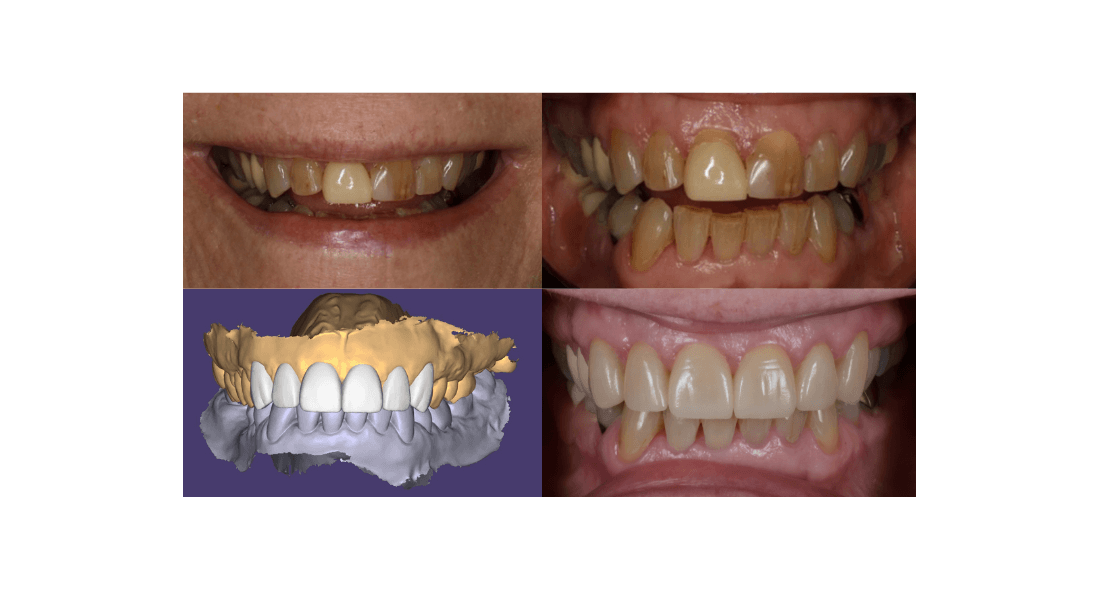
Initial Diagnosis
A 69-year-old female patient presented to Dr Hoai Nguyen at My Family Dental Townsville, unhappy with the appearance of a recently placed central crown.
The patient had initially sought treatment for a lost filling on a front tooth. A single central crown had been placed a couple of months earlier, but she was dissatisfied with its shape, colour, and position within her smile. This had significantly affected her confidence.
Dr Nguyen’s assessment also identified dark teeth with uneven colouring throughout the patient’s smile. Treatment needed to address both the individual crown and the broader aesthetic concerns to achieve a harmonious result.
The patient was very anxious about further treatment, particularly the prospect of removing more tooth structure. Following her initial crown preparation, she felt she had been left with very little of her natural tooth. Understanding this concern and helping her feel comfortable with the proposed approach were central to treatment planning.
Treatment Plan
Dr Nguyen planned six porcelain restorations to restore function, improve aesthetics, and harmonise the colour of the patient’s smile.
The approach combined two crowns on the central incisors, selected because of previous interproximal composite restorations, with four veneers to limit the removal of sound tooth structure.
Discussion focused on the patient’s concerns about her remaining tooth structure and the reasons for selecting each restoration type. This gave Dr Nguyen an opportunity to explain the proposed preparations and address the patient’s anxiety associated with her previous experience.
Rebuilding confidence in dental treatment was also an important part of the case. Dr Nguyen approached these conversations with empathy and professionalism, acknowledging the patient’s dissatisfaction while avoiding criticism of her previous dentist.
Careful planning and communication with Avant Dental Lab supported a workflow that gave the patient time to consider the proposed changes and participate in decisions about her smile:
- Treatment discussion: Dr Nguyen explored the patient’s concerns about the existing crown, her smile’s appearance, and further tooth preparation. Dr Nguyen discussed the proposed combination of crowns and veneers in the context of these concerns.
- Record-taking: Clinical records were collected to support smile planning and communicate the case requirements to Avant Dental.
- Smile design and laboratory collaboration: Dr Nguyen worked with Avant Dental through the design process to develop a mock-up of the proposed smile. Clear communication helped align the laboratory work with the intended result.
- Trial and temporaries: The patient was given time to sit with the trial smile and temporary restorations before proceeding. This allowed her to consider the design and take an active role in decisions about the final appearance.
- Final restorations: After this review process, Avant Dental supplied the final porcelain crowns and veneers, and treatment was completed.
Treatment Summary
This case required an approach that addressed the patient’s aesthetic concerns while responding to her anxiety about further dental treatment:
- A recently placed central crown did not meet the patient’s expectations for shape, colour, or position.
- Dark teeth and uneven colouring affected her smile’s overall appearance.
- The patient was concerned about losing further tooth structure during preparation.
- Two central crowns and four veneers were planned to balance the restorative requirements with preservation of sound tooth structure.
- Records, smile design, a mock-up, and time with temporaries supported patient involvement before finalisation.
Final Outcome
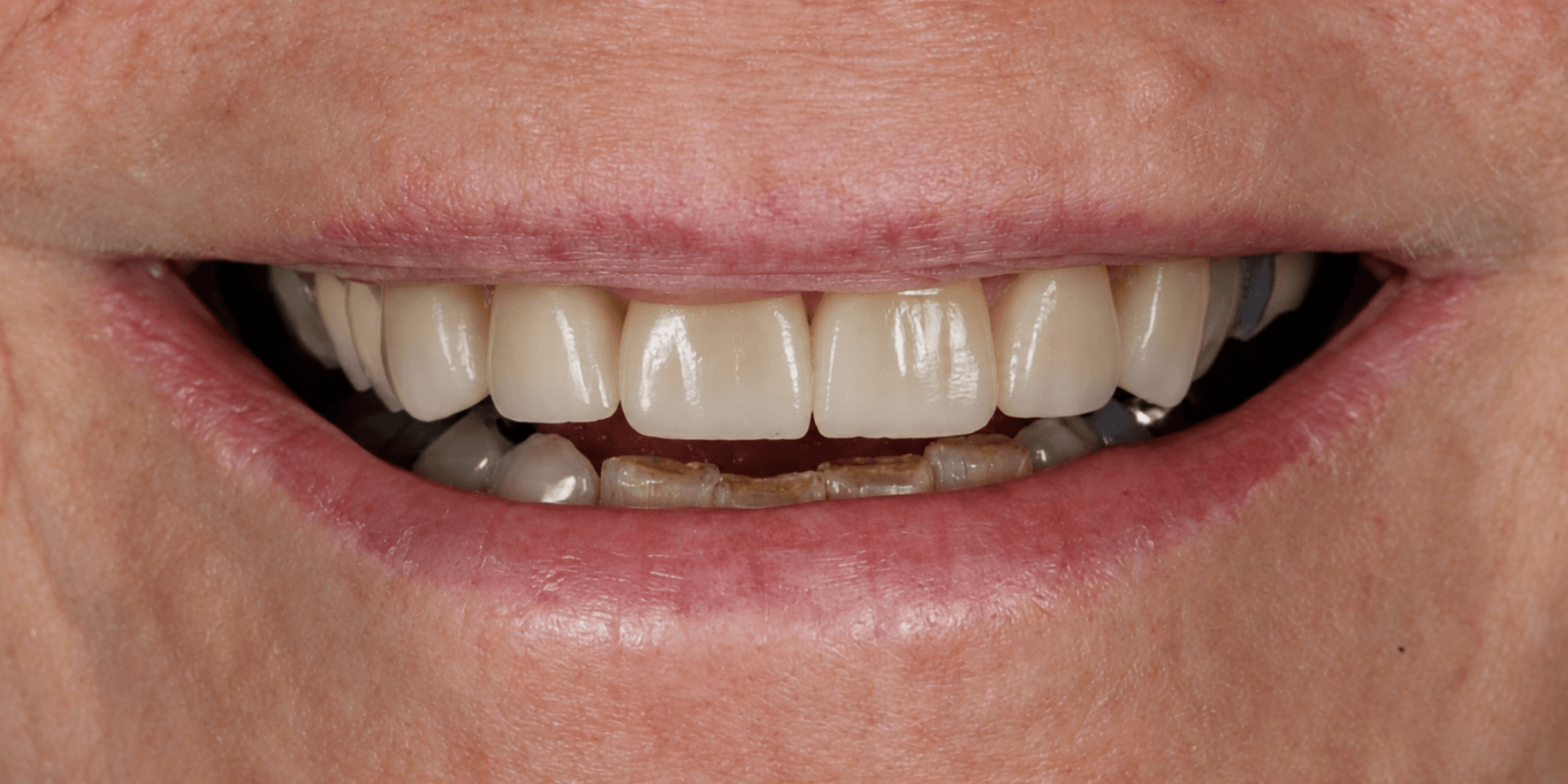
Anthony LoCastro, Avant Dental’s Senior Technician – Head of Implants, spoke about the case. “Working on this case with Dr Nguyen was a real collaboration—everything was carefully planned, designed, and refined to match the smile she envisioned. The outcome was incredibly rewarding, and it truly shows how communication between the dentist and the lab makes the difference for a patient’s confidence. Combining crowns and veneers let us solve the aesthetic problem without taking away more of her natural teeth than necessary, which was one of the patient’s main concerns. Seeing the final smile come together was fantastic.”
The patient received a smile she could feel confident with. Dr Nguyen reported a marked change in the way she carried herself, smiled, and spoke after treatment compared with her first appointments.
The final crowns and veneers supplied by Avant Dental were exactly what Dr Nguyen had aimed to achieve for the patient’s smile. The result addressed the concerns that had brought her to the practice and delivered the harmonious appearance sought during planning.
Dr Nguyen described Avant Dental’s work as “flawless from start to finish”, highlighting prompt, clear communication and a collaborative approach throughout the design process.
The outcome reflected the importance of giving an apprehensive patient time to participate in treatment decisions. Allowing her to consider the trial smile and temporaries before finalisation helped keep her preferences central to the process.
For Dr Nguyen, this case involved rebuilding confidence in dentistry alongside improving the patient’s smile. Empathetic discussion, a considered combination of restoration types, and close communication with the laboratory supported an outcome that met the intended aesthetic goals.
See what’s possible with digital veneer planning
Want to discover how Avant Dental’s lab support can help dentists plan crowns and veneers with confidence? Visit www.avantdental.com.au or call 1800 287 336 to explore what’s possible for your patients.
All case studies presented by Avant Dental are done so with permission from the ordering dentist. No patient details are shared, and all representations are true and accurate to the case.